
"frost coffee"
5000 article(s) found

How do Honduran roasted coffee beans taste Kaddura flavor description altitude introduction
How do Honduran roasted coffee beans taste Kaddura description altitude introduction Honduran coffee is introduced from El Salvador. At first coffee production was in a state of unavoidable heat until the frost in Brazil in 1975. At that time, Brazil was hard hit and coffee production plummeted, while Honduras took the opportunity to take advantage of the surge in coffee production from 500000 bags to 1.8 million bags and was ransacked. Since then,

Introduction to the method of regional variety treatment for the grinding scale of Bolivian coffee beans with sweet caramel
In the past, coffee trees in Bolivia used to act as hedges and ornaments around the garden. Real commercial production began in the early 1950s. The coffee industry in Brazil was seriously damaged by the great frost in 1975, while Bolivia (Bolivia) benefited from it and developed rapidly. The origin of Bolivian coffee: Bolivian coffee at an altitude of 180 Muhami 670 meters.

Introduction to Bolivian Coffee producing areas with excellent Coffee varieties-Tibica
Arabica coffee cannot be grown in cold places above 2000 meters above sea level. if the altitude is too high, coffee trees will frost because the temperature is too low. So Bolivian coffee is mainly grown in the Yungas region northeast of La Paz. It borders the Amazon basin and is about 1500-2500 meters above sea level with an average annual temperature of about 10-15 ℃. Therefore, it ensures the growth of coffee.

Introduction of Bolivian Coffee Manor to Snow vein Manor Bolivian coffee taste
Arabica coffee cannot be grown in cold places above 2000 meters above sea level. if the altitude is too high, coffee trees will frost because the temperature is too low. So Bolivian coffee is mainly grown in the Yungas region northeast of La Paz. It borders the Amazon basin and is about 1500-2500 meters above sea level with an average annual temperature of about 10-15 ℃. Therefore, it ensures the growth of coffee.

Flavor description of Antigua Coffee beans in Guatemala
The flavor of Guatemala Antigua coffee beans describes the taste, grinding scale, aroma of coffee, liberating all forms, minds and national boundaries. Through coffee, the mood leaves the country at any time and lands in a strange country half a world away. Even at the end of the world, you can share a mood. Antigua was the capital of the Spanish colonial period in 1543. Although this emerald-like valley

Bolivian Fine Coffee Bean Flavor Taste Manor introduces the characteristics of Bolivian Coffee
Arabica coffee cannot be grown in cold places above 2000 meters above sea level. if the altitude is too high, coffee trees will frost because the temperature is too low. So Bolivian coffee is mainly grown in the Yungas region northeast of La Paz. It borders the Amazon basin and is about 1500-2500 meters above sea level with an average annual temperature of about 10-15 ℃. Therefore, it ensures the growth of coffee.
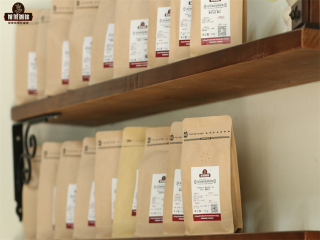
Variety and taste of Yunnan coffee beans introduction to the flavor and taste characteristics of Yunnan coffee producing areas
Follow the caf é (Wechat official account vdailycom) and found that the Beautiful Cafe opened a small shop of its own. Catimor, also known as Katim, which was bred by the Portuguese in 1959, has 3/4 Arabica blood and 1/4 Robusta blood, and is extremely strong and resistant.

Bolivian coffee producer Yongas, northeast of La Paz, has a unique coffee growing environment.
We know that Arabica coffee cannot be grown in cold places above 2000 meters above sea level. if the altitude is too high, coffee trees will frost because the temperature is too low. So Bolivian coffee is mainly grown in the Yungas region northeast of La Paz. It borders the Amazon basin and is about 1500-2500 meters above sea level with an average annual temperature of about 10-15 ℃. Therefore, guarantee

Introduction of Bolivian coffee producing areas with rich and balanced taste and unique aroma
Arabica coffee cannot be grown in cold places above 2000 meters above sea level. if the altitude is too high, coffee trees will frost because the temperature is too low. So Bolivian coffee is mainly grown in the Yungas region northeast of La Paz. It borders the Amazon basin and is about 1500-2500 meters above sea level with an average annual temperature of about 10-15 ℃. Therefore, it ensures the growth of coffee.

World Classic Coffee preparation method Creative fancy Coffee making method
1. Turkish coffee: full of exoticism: Turkish coffee Turks always look at the traces of residual coffee powder at the bottom of the coffee cup after drinking coffee to understand the luck of the day from its appearance. Preparation method: pour the deep-fried coffee and cinnamon and other spices into the milk basin, stir well, then pour into the pan, add some water to boil 3 times, and remove from the fire. To be precipitated by powder

The former coffee kingdom, Brazilian coffee.
In the 1660s, the South American continent was still in a natural silence, and the aborigines lived a happy and heavenly life in this rich and fertile land. Brazil, which covers an area of more than 3 million square kilometers, occupies a major part of South America. In 1727, Pachta, a Portuguese officer, seduced the wife of the Governor of French Guiana into introducing coffee to Brazil with coffee seeds.

Guatemala Picotenango Highland Coffee Production Area with Dry Climate but Abundant Water
Vivit South Fruit Production Area is located in the northwest highlands of Guatemala. It is planted at an altitude of 1800-2100 meters. It is the highest coffee production area in the country and is famous for producing excellent quality beans. Due to the large number of rivers and lakes in Guatemala, the Vivitenango region is rich in mountains and water resources, the climate is dry but the water supply is abundant, and the water conservancy facilities in the region are complete, so coffee is mostly washed and added.

Introduction to Columbia's Linglong Coffee
Colombia, on the other hand, has three Codiera mountains running north-south, right into the Andes. Coffee is grown along the highlands of these mountains. The mountain steps provide a diverse climate, where the whole year is the harvest season, and different kinds of coffee ripen at different times. And fortunately, unlike Brazil, Colombia doesn't have to worry about frost. There are about 2.7 billion coffee in Colombia.
High-quality Coffee Common sense World Classical Coffee preparation method
1. Turkish coffee: full of exoticism: Turkish coffee Turks always look at the traces of residual coffee powder at the bottom of the coffee cup after drinking coffee to understand the luck of the day from its appearance. Preparation method: pour the deep-fried coffee and cinnamon and other spices into the milk basin, stir well, then pour into the pan, add some water to boil 3 times, and remove from the fire. To be precipitated by powder

Flavor description of Coffee Bean processing in Incht Manor, Guatemala
Flavor description of Coffee Bean treatment in Incht Manor, Guatemala Coffee beans are mostly cultivated in high-altitude volcanic area soils belonging to the most advanced Arabica varieties. Due to the long ripening period, the beans are of medium and dense type (Guatemalan coffee beans are graded not on the basis of particle size, but on the basis of shortcomings), and the color of beans is
Brazil-once the Kingdom of Coffee
In the 1660s, the South American continent was still in a natural silence, and the aborigines lived a happy and heavenly life in this rich and fertile land. Brazil, which covers an area of more than 3 million square kilometers, occupies a major part of South America. In 1727, Pachta, a Portuguese officer, seduced the wife of the Governor of French Guiana into introducing coffee to Brazil with coffee seeds.

Brazil was once the coffee kingdom.
In the 1560s, South America was still in a natural silence, and the aborigines lived a happy and heavenly life on this rich and fertile land. Brazil, covering an area of more than 3 million square kilometers, occupies the main part of South America. in 1727, Pachta, a Portugal military officer, seduce that wife of the governor of Guyane française with coffee seeds and introduced coffee to Brazil.

Introduction to the Flavor of Vitnam Fruit Coffee beans in Antigua, Guatemala
Introduction to the Flavor of Vetnam Fruit Coffee beans in Antigua, Guatemala in the world of coffee, each producing country is divided into several producing areas, and there will be many manors in different producing areas, and the varieties and processing methods of coffee grown in the manor are different. in the end, the flavor of coffee will be different, and even the microclimate of the place of origin is cleverly affecting the quality of coffee. But the charm of coffee is that
The former coffee kingdom of Brazilian coffee
In the 1660s, the former coffee kingdom of Brazil, the South American continent was still in a natural silence, and the indigenous people lived a happy and heavenly life in this rich and fertile land. Brazil, which covers an area of more than 3 million square kilometers, occupies a major part of South America. In 1727, Pachta, a Portuguese officer, seduced the wife of the Governor of French Guiana with coffee seeds.

The former coffee kingdom of Brazil
In the 1660s, the South American continent was still in a natural silence, and the aborigines lived a happy and heavenly life in this rich and fertile land. Brazil, which covers an area of more than 3 million square kilometers, occupies a major part of South America. In 1727, Pachta, a Portuguese officer, seduced the wife of the Governor of French Guiana into introducing coffee to Brazil with coffee seeds.